Module 2: Glucose monitoring
Module 2 Overview
Rationale for this Module
People with diabetes use blood glucose meters to check their blood glucose levels using a drop of blood on a strip/sensor. People with a disability often need assistance from support workers to do this. Accurate results are important to evaluate the impact of food, exercise, stress and, if required, medication, to guide the management of their condition. Support workers require education to check, think and act on the results for quality diabetes care in those who depend on the assistance of others.
Module aim
To provide support workers with the knowledge and skills to actively support individuals with a disability to monitor and act on blood glucose levels for quality health outcomes.
Pre-requisites
- Successful completion of your employing organisation’s Medication Management course.
- Successful completion of EdHealth Australia’s Diabetes Care in the Community Overview of Diabetes care module and final quiz.
At the completion of this Module, support workers will be able to:
- State 8 reasons why people with diabetes check their blood glucose levels.
- State 9 potential times it is recommended to check a blood glucose level for a comprehensive review.
- Identify when and why the frequency of blood glucose monitoring is changed in individuals with diabetes.
- State the ideal, satisfactory and unsatisfactory range of blood glucose levels for people with diabetes.
- Describe how to chart blood glucose levels and review them to identify the trend of the level at particular times during the day.
- Accurately and comprehensively chart blood glucose results.
- State the support worker’s role in blood glucose monitoring.
- State six actions support workers can take to get an accurate blood glucose reading.
- Identify five ways to encourage the active involvement of the person with diabetes in their blood glucose monitoring.
- Demonstrate how to use the Check, Think and Act resource to identify if a person’s blood glucose level is low, on target or high.
- State how to act on a blood glucose reading when low, on target or high.
- Identify where to find low literacy resources to support people with diabetes and low literacy to blood glucose monitor.
- Discuss how to maintain blood glucose monitoring equipment for accurate and safe monitoring.
- Identify when a person requires medical review in relation to their blood glucose monitoring results.
- State six ways to prevent needle-stick injuries when supporting an individual to blood glucose monitor.
- State the procedure to treat a needle-stick injury received during the collection of a drop of blood for blood glucose monitoring.
- Understand the role of quality control solution in ensuring the accuracy of the meter and when it is completed for a quality system of monitoring.
- Describe and demonstrate how to do a blood glucose level accurately using a portable meter and capillary blood sample.
- Identify the appropriate finger-pricking device for safe use by support workers when supporting clients/customers with diabetes.
Lessons in the Blood Glucose Monitoring Module:
-
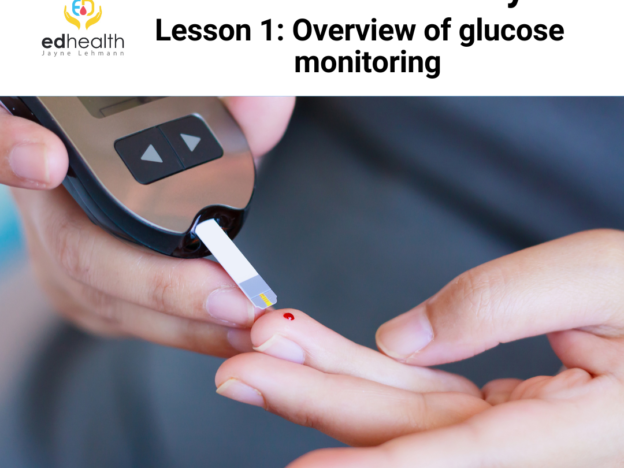
Lesson 1: Overview of Blood Glucose Monitoring
-
Lesson 2: Support Workers Role in Blood Glucose Monitoring
Instructions:
Click on Lesson 1 link below to start the Module. Read through the aims and expected outcomes and then work your way through the content which is set out in steps using the icons previously used in Module 1.
-
End of Module 2 Quiz
The link to the Module 2 Quiz is found alongside this icon in Lesson 2.
-
Successful completion of the course:
Once you have completed all of the lessons in the Module click on the link to the quiz at the end of Lesson 2. A score of 80% or above is required to pass the final quiz.
-
Blood glucose monitoring (BGM) practical session
 You will be attending an On-Line Video Session with Jayne Lehmann RN CDE to have your technique using the blood glucose meter evaluated. Each participant will be asked to demonstrate their BGM technique using the meter to see if they are using the meter accurately.
The procedure/audit of technique form for the meter you use guides the way you practice your BGM technique, which is done after watching the video on using the meter and looking at the meter instructions. Make sure you print-off the form, read it through a number of times and practice the technique until you feel confident. Jayne will use this form to evaluate your technique during the on-line video session.
Practice your blood glucose monitoring technique using the quality control solutions provided, NOT BLOOD, until you feel confident.
-
Evaluation

At the end of Module 2 you will be asked to complete a survey to provide feedback on your experience of this Module. This will help us to continue to improve the course by making sure it addresses the needs of support workers.